View case
A man spraying with some kind of liquid a giant piece of metal suspended from the roof of a big manufacturer factory.

De-risking remote collaboration for Hitachi’s industrial network.

First steps towards a future remote network.

As a multinational conglomerate operating in various industries, Japanese company Hitachi used the pandemic as an opportunity to make their operations more resilient, collaborative and networked.

I was brought in to cooperate with Hitachi’s R&D members for 2 to 3 weeks to conceptualize and prototype a platform for collaboration between factory and remote engineers, technicians and managers, taking advantage of state of the art cameras and their software infrastructure, while ensuring optimal security and production standards.

As a result of this collaboration, Hitachi started the development of a full dedicated program for building, monitoring and evolving a remote collaboration network.

Hitachi, view project

Balancing inmediate fixes with future vision.

Faced with the urgent need to bridge the gap between on-site technicians and remote management during the pandemic, Hitachi’s R&D team sought to reinvent their collaborative tools using existing internal resources. The goal was twofold: address immediate friction and build a scalable foundation for the future.

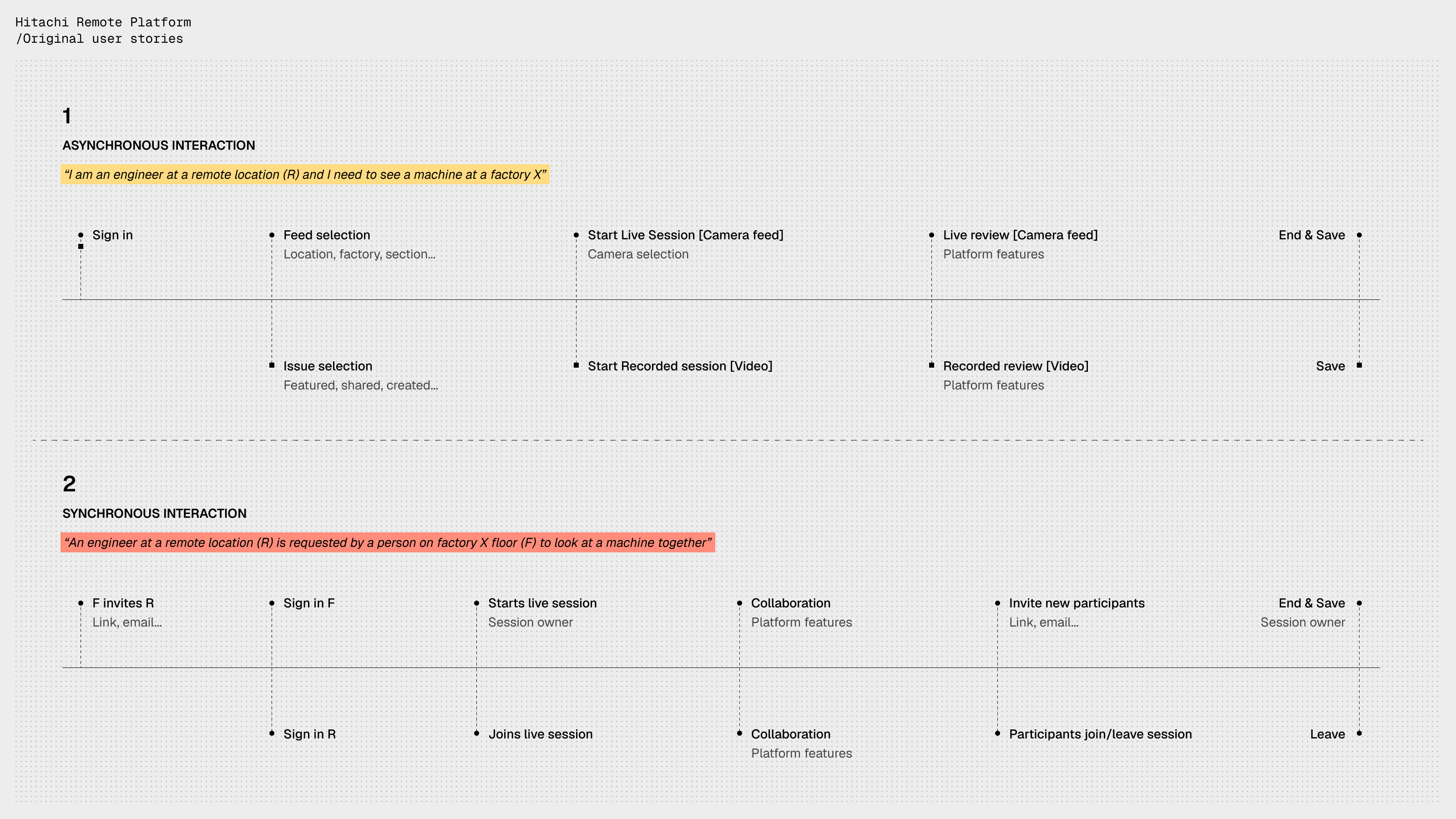
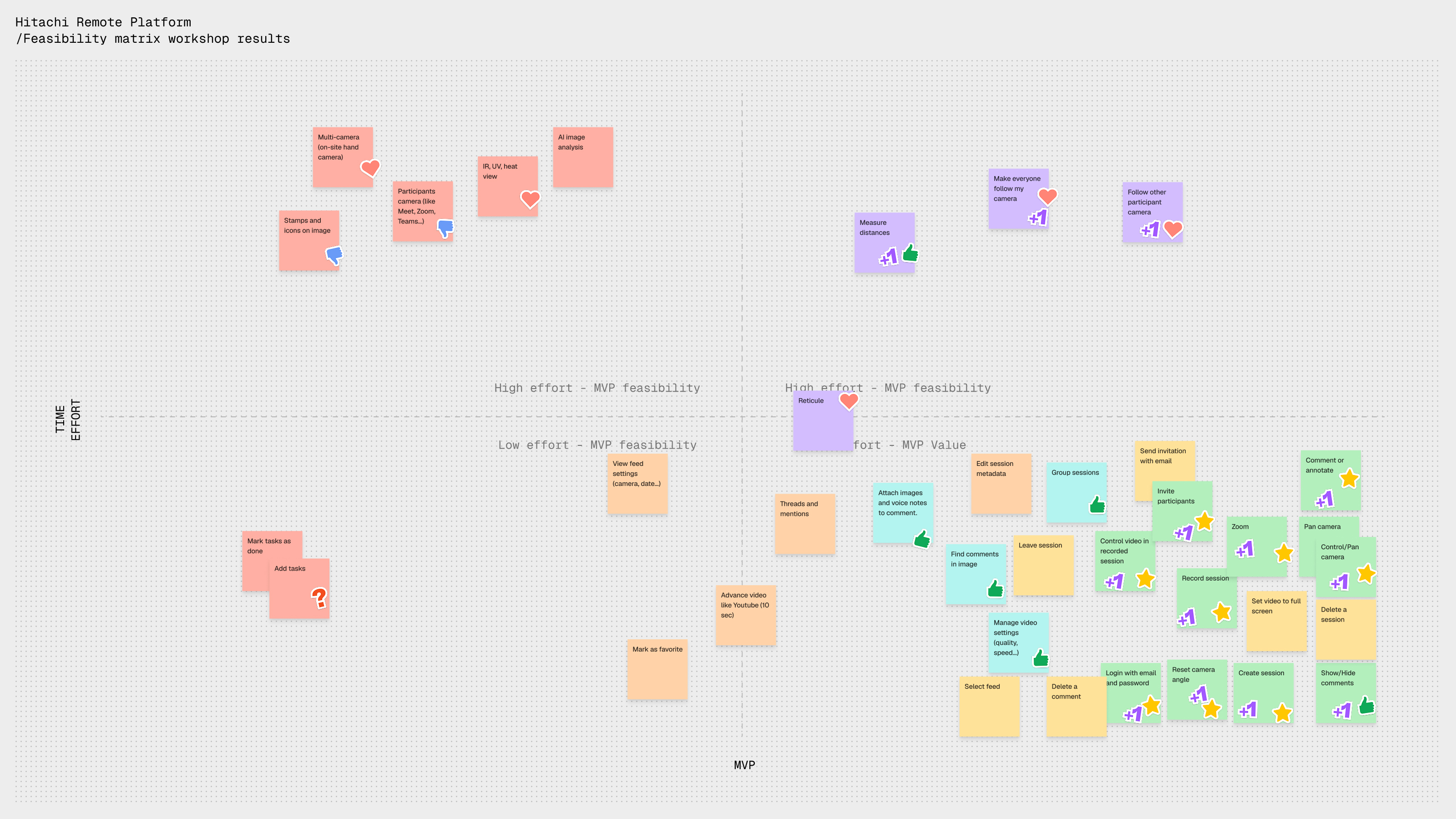
To test the viability of this approach, we moved quickly into collaborative sketching and ideation sessions. These visual discussions were pivotal, enabling stakeholders, engineers and developers to align on technical constraints and opportunities, resulting in a defined scope for a strategic MVP.
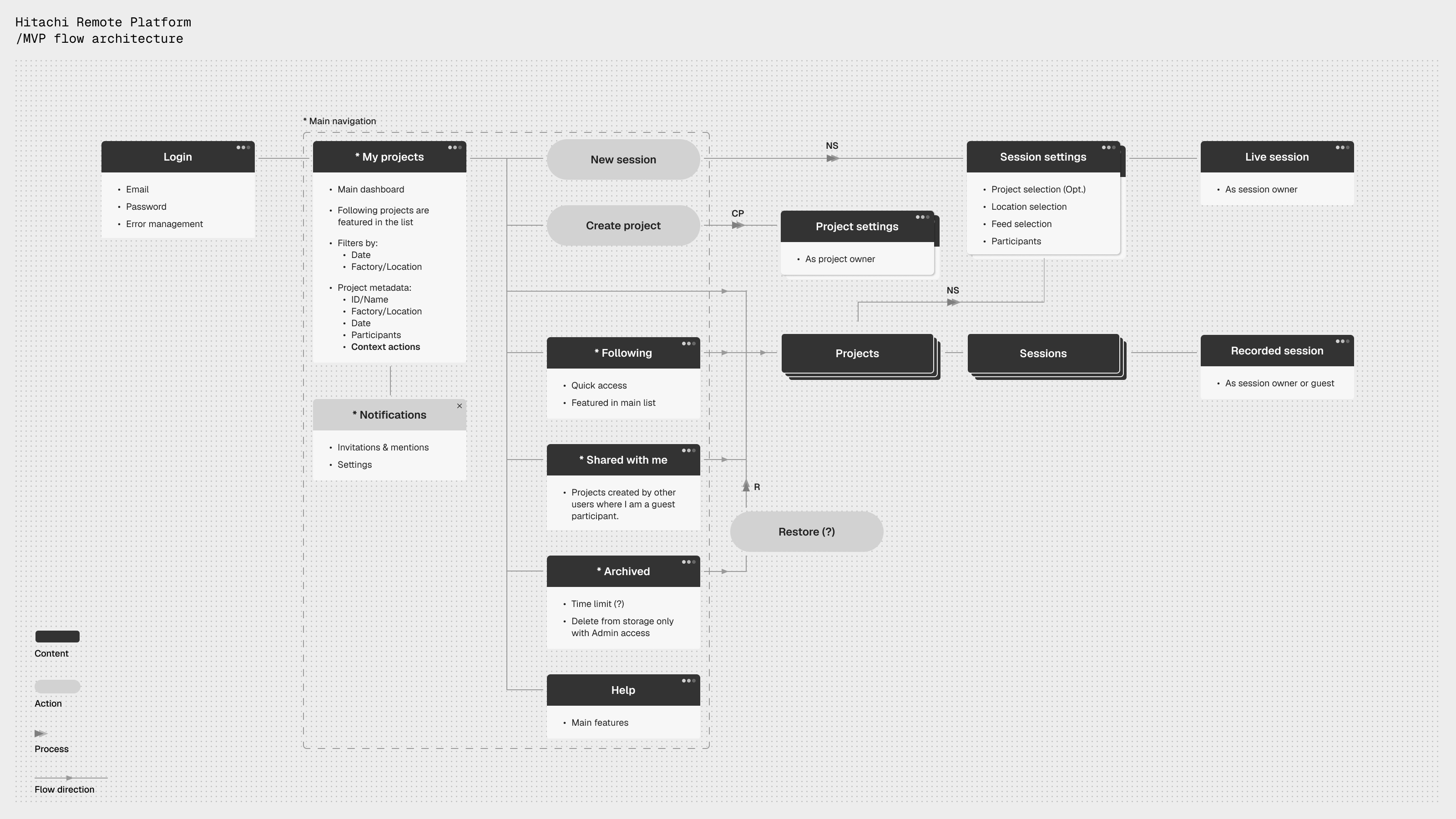
Defining the concept through live prototyping sessions.

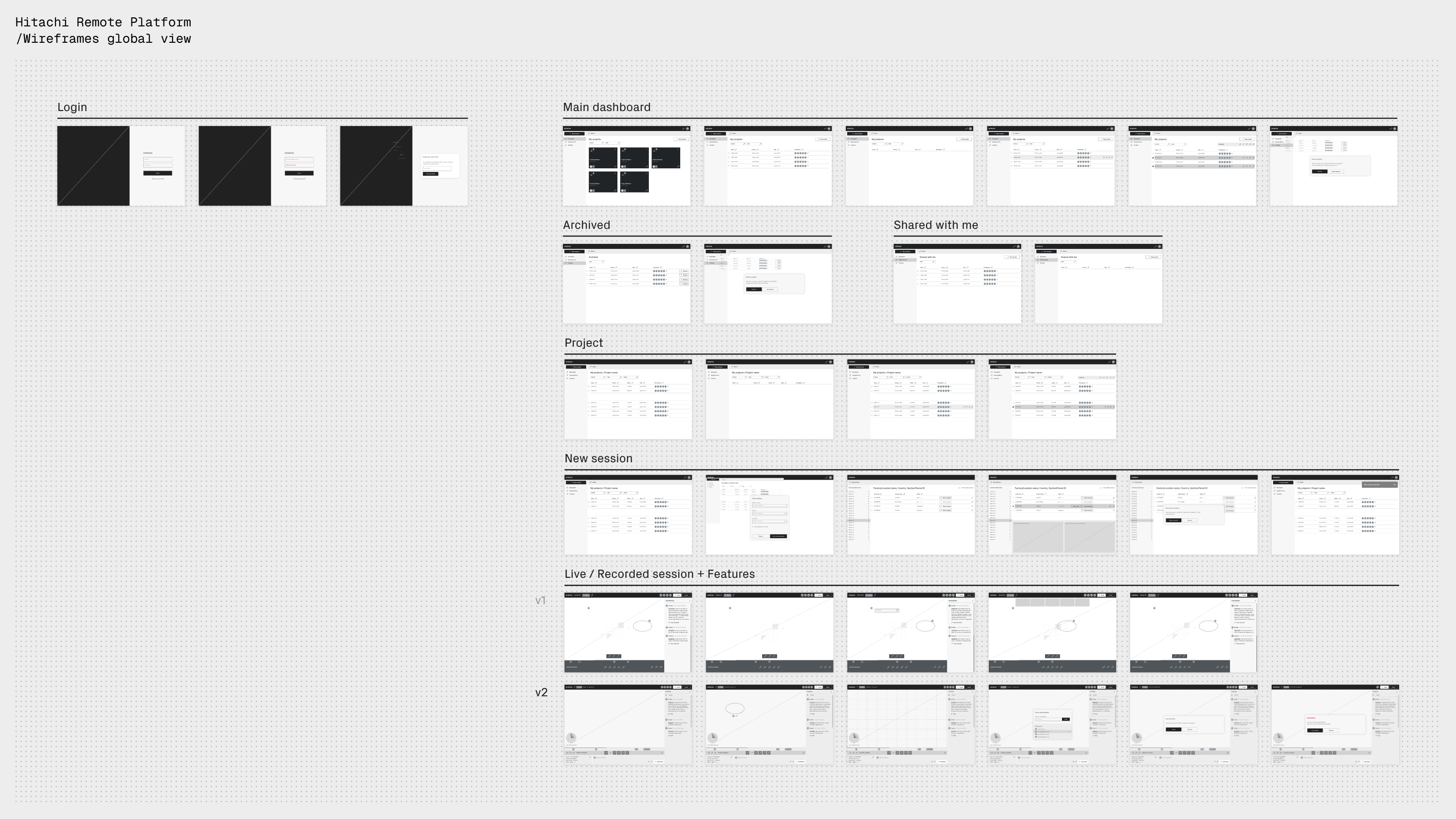
After a few meetings, we prioritized collaborative live sketching sessions which significantly accelerated the process. This facilitated rapid and unified decision-making regarding scope, functionalities, restrictions and viability parameters, allowing us to quickly establish a strong foundation before diving into more detailed wireframes.

Exploring visual solutions for strategic alignment.

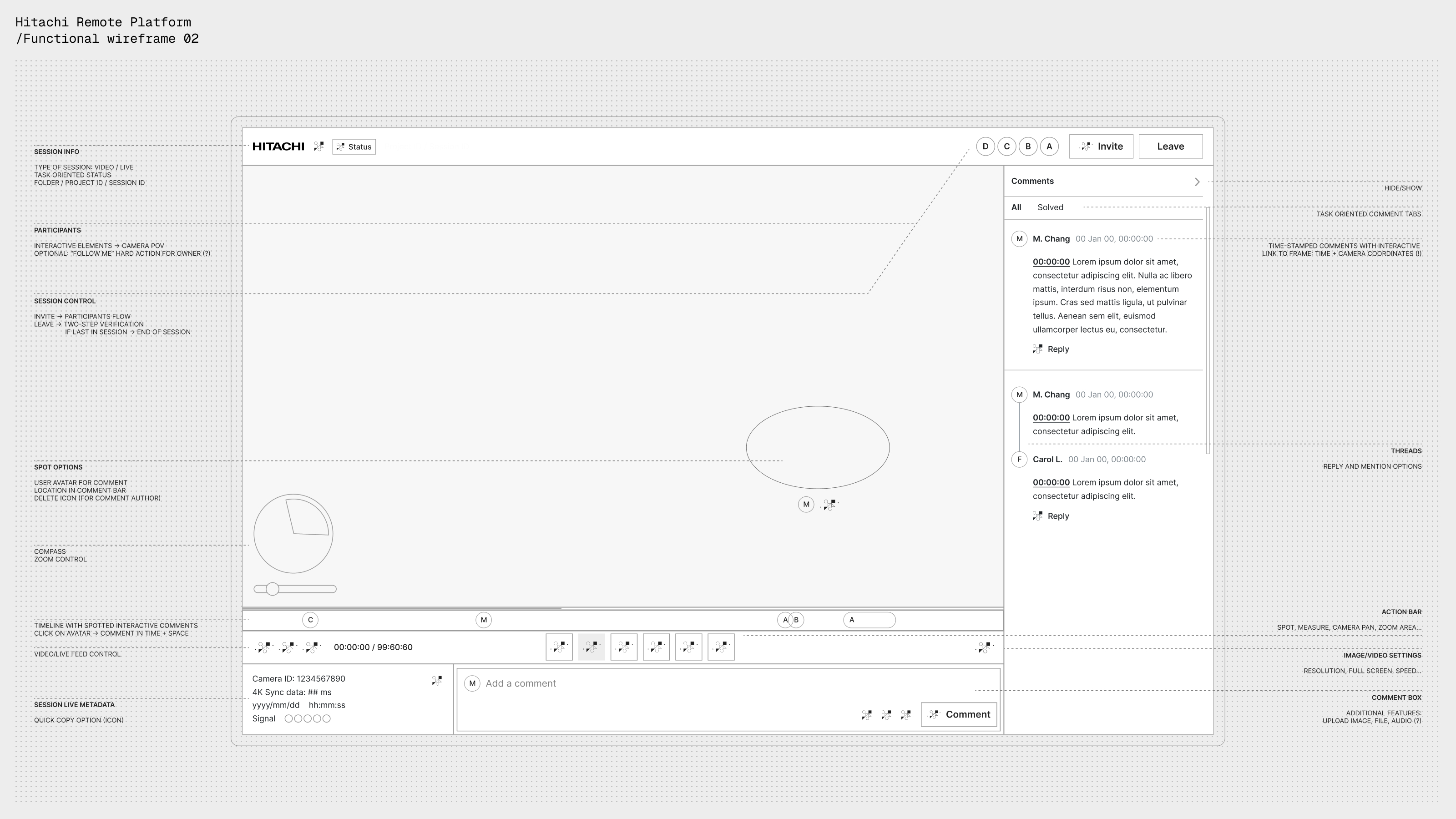
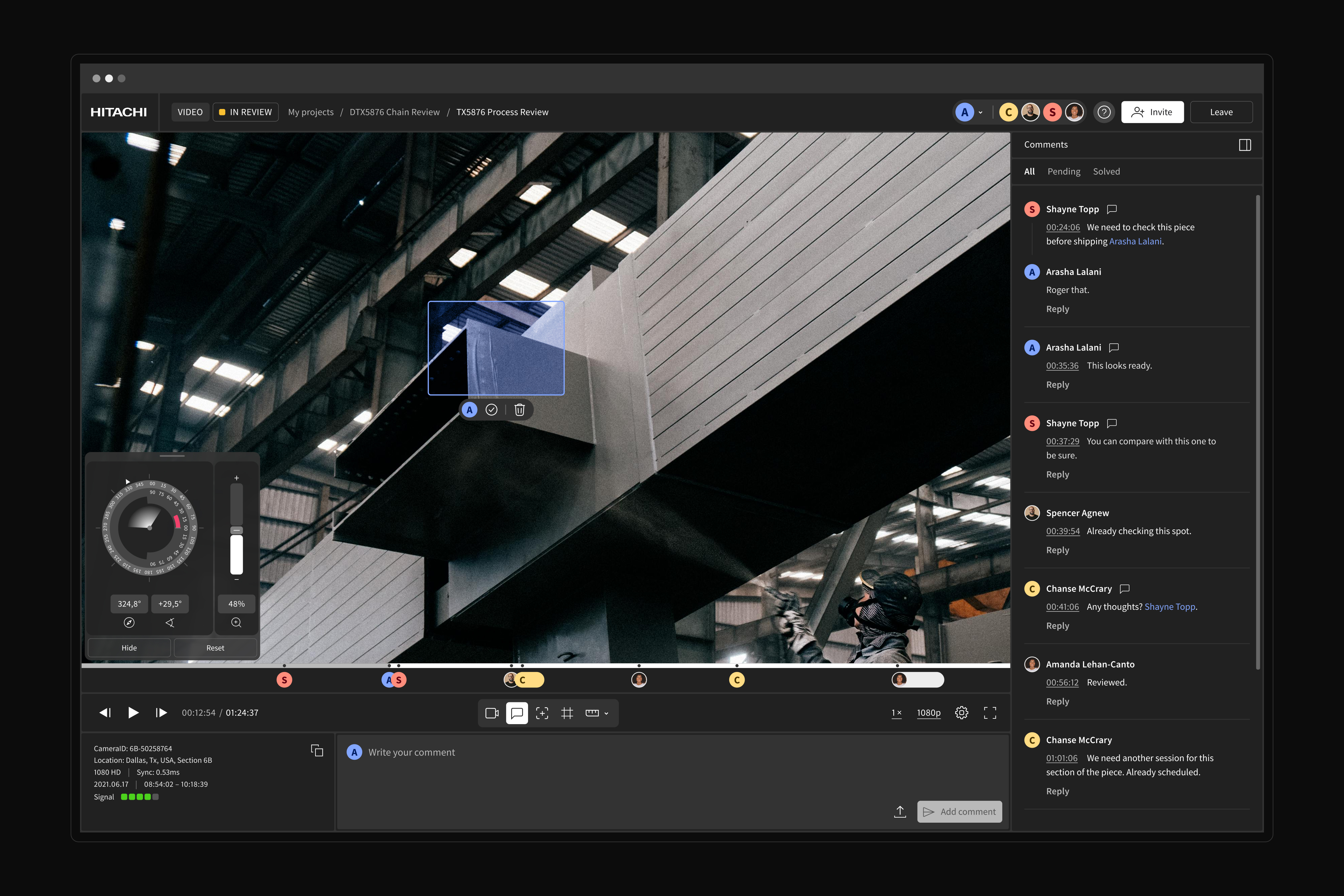
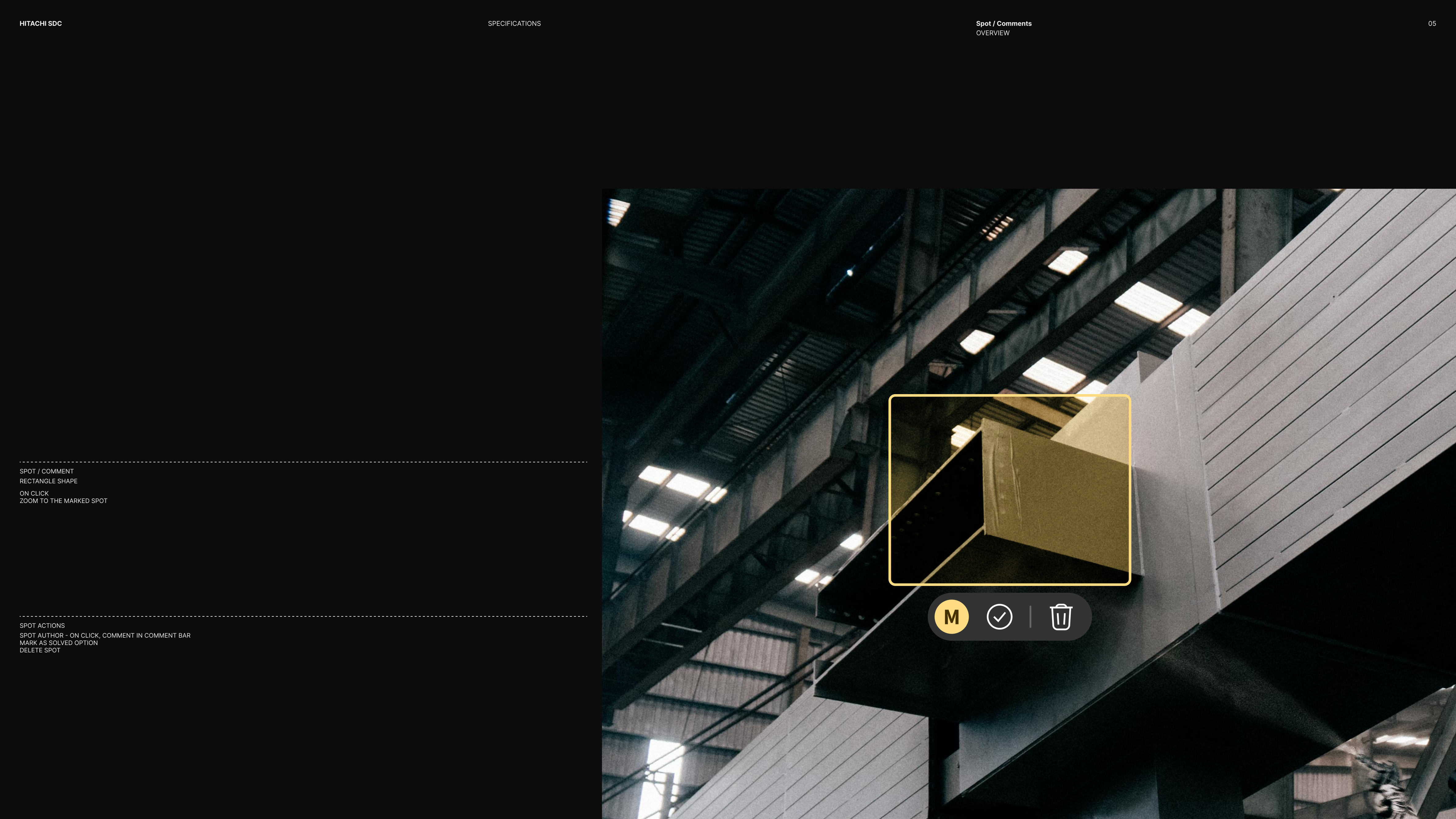
In preparation for a potential MVP derived from the project's conceptual framework, we embarked on a visual design phase that was instrumental in demonstrating to the different teams the platform's capabilities and potential growth trajectories. A comprehensive documentation served as a crucial reference for stakeholders, ensuring a common ground for future iterations.

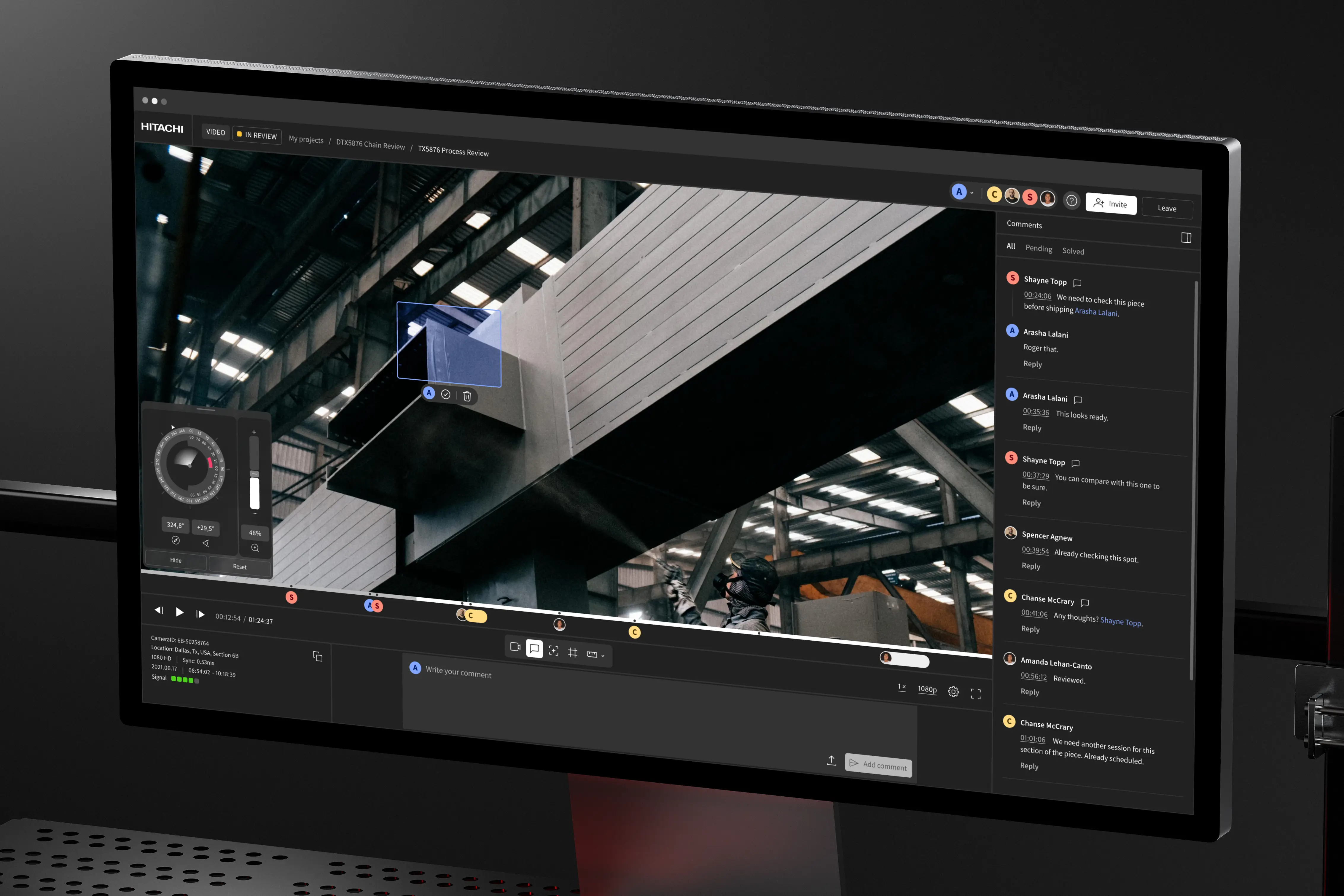
Video review interface showing a close-up of a large industrial metal structure inside a factory with comments and annotation tools on the right side.
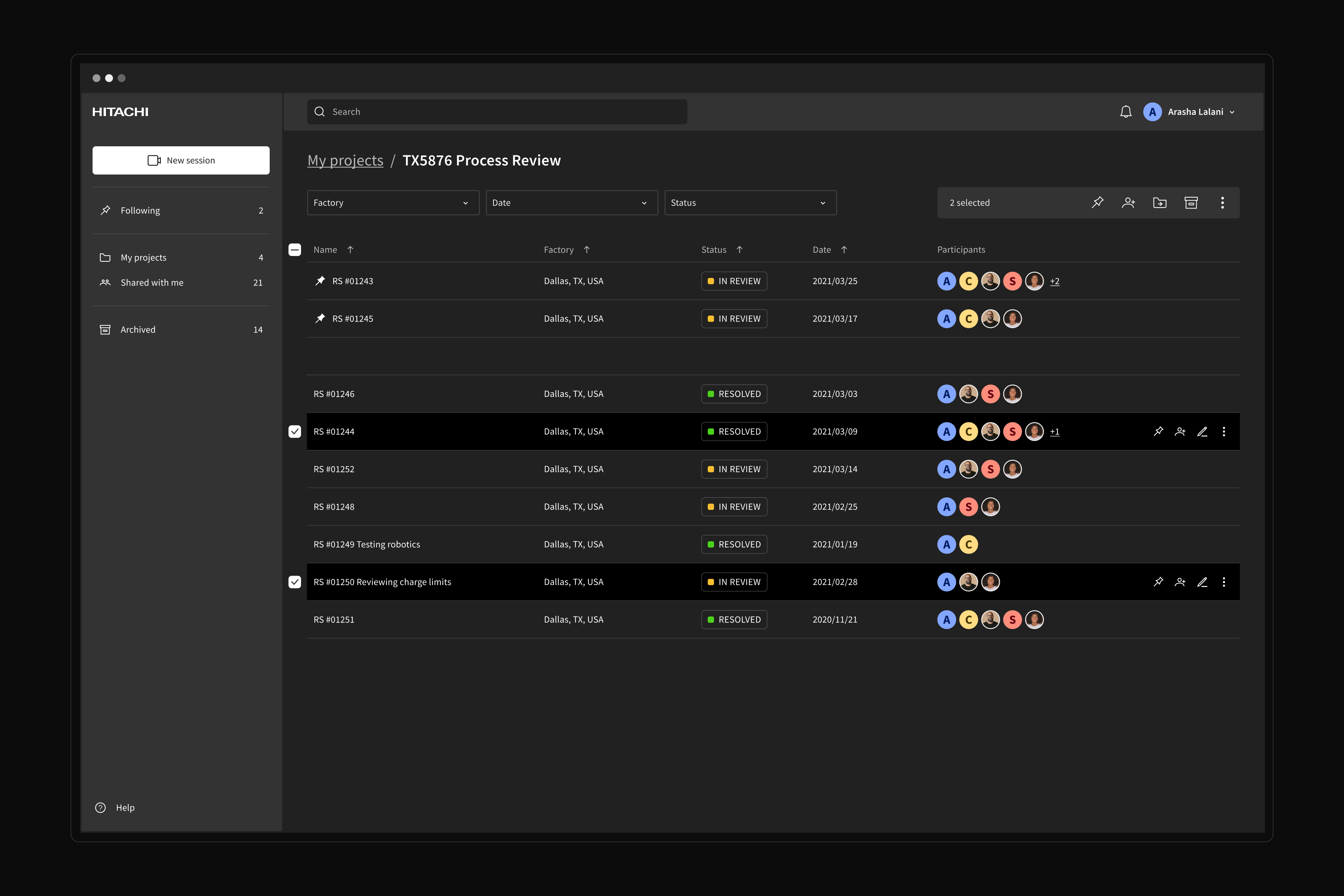
Dark-themed project management dashboard from Hitachi showing TX5876 Process Review with table listing project names, locations, statuses, dates, and participant avatars.

Serving successfully as a proof of concept and more.

Without losing sight of the main objective — to demonstrate the feasibility, scalability and utility of a remote collaboration network between on-site and off-site personnel — potential features such as multi-camera feeds, integrated audio communication or AI-driven image analysis were considered in the process, sparking open discussions for future iterations.

In terms of performance, the need to collaborate with stakeholders and developers remotely, at speed, whilst set against the backdrop of the global pandemic, made this project simultaneously challenging and rewarding and served as a glimpse of how Hitachi teams can collaborate and achieve results through well designed workflows and tools.

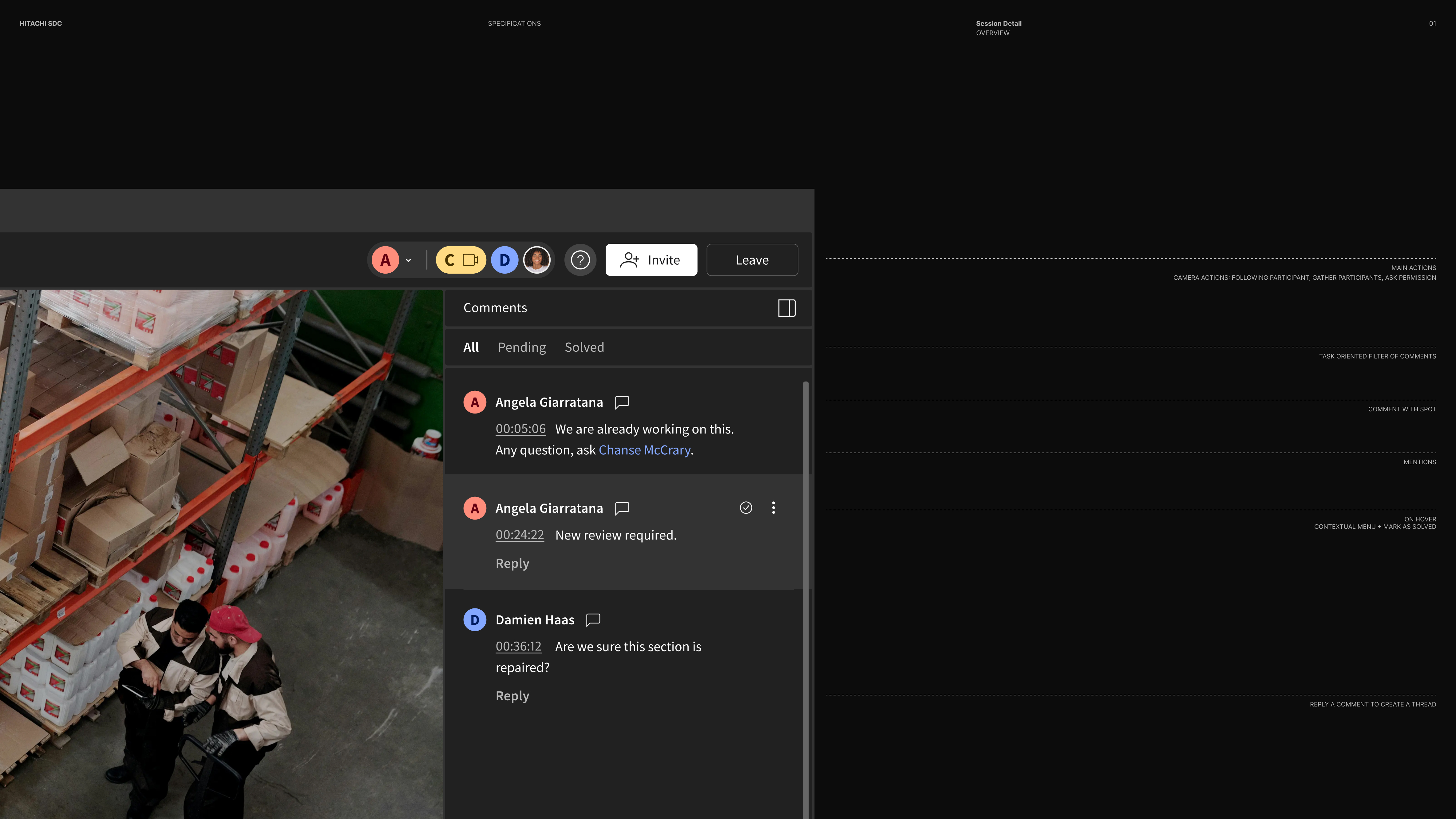
Laptop screen showing a warehouse video feed with two workers in uniforms inspecting items on a pallet, alongside a live comments section and video controls.

Drop me a line for more details.
▾ Explore more work
Oysho Training

Coming soon

Conceptualization
Prototyping
UI